

-
-
Products and ServicesLottery
Anti-counterfeiting label
Bills and DocumentsBusiness LetterCertificatePark OperationsE-commerce
-
Company Profile
Corporate Culture
Branch Office IntroductionPark Services
-

undefined
undefined
Bills and Documents
Views:
1000
Category:
Certificate
Case Introduction
I. Processing Methods for Tempered Glass
1. Physical Processing Method: Physically tempered glass is also known as quenched tempered glass. In this process, ordinary flat glass is heated in a furnace to a temperature close to its softening point (approximately 600°C). During heating, the glass undergoes thermal deformation that relieves internal stresses. The glass is then removed from the furnace and subjected to rapid, uniform cooling by directing high-pressure cold air onto both surfaces through multi-nozzle sprayers, bringing it down to room temperature. This results in tempered glass. Such glass is in a state of tensile stress internally and compressive stress externally; if a localized break occurs, the stored stress is instantly released, causing the glass to shatter into numerous small fragments. These fragments lack sharp edges and corners, making them less likely to cause injury. Nevertheless, proper eye protection must be worn during the tempering process to prevent accidental injury under various circumstances.
2. Chemical Processing Methods: Chemical tempering involves chemically altering the surface composition of glass to increase surface compressive stress, thereby enhancing its mechanical strength and thermal stability. Because this process strengthens glass through ion exchange, it is also referred to as ion-exchange strengthening. Depending on the type of ions exchanged and the temperature at which the ion exchange is carried out, the method can be further classified into low-temperature ion exchange, conducted below the glass transition temperature, and high-temperature ion exchange, conducted above the glass transition temperature. This method is widely used and is considered a relatively safe manufacturing technique.
II. How to Identify Tempered glass True or false
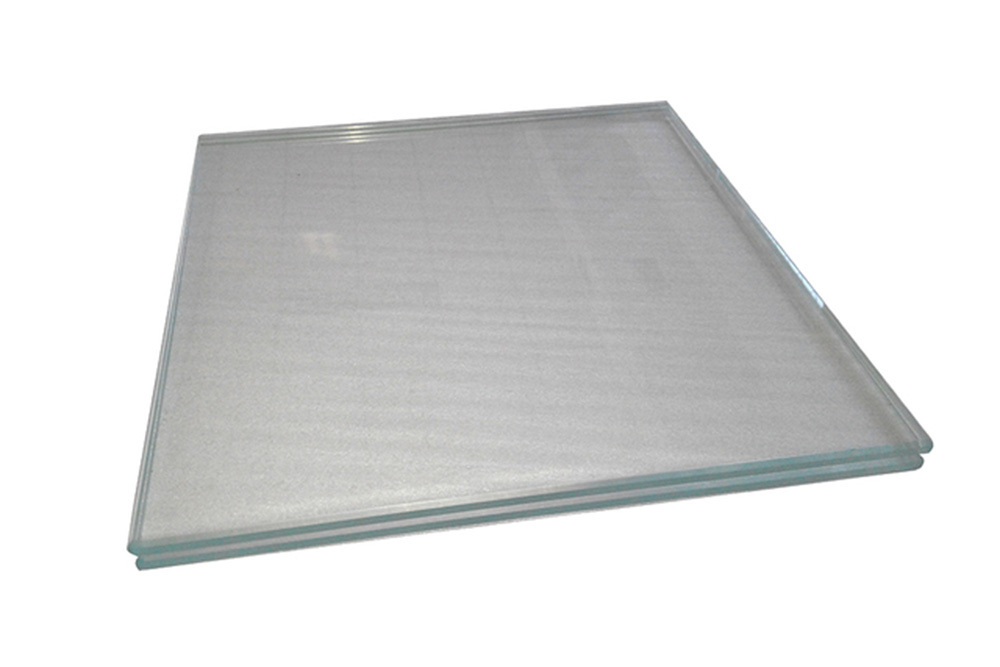
1. Whether glass shatters into small granules or sharp, blade-like fragments is the primary distinguishing feature between tempered glass and ordinary glass. Typically, ordinary glass breaks into sharp, blade-like shards that can easily cause cuts; in contrast, tempered glass breaks into uniform, small granules with no sharp, blade-like edges, which is why it is referred to as safety glass.
2. Many people believe that the 3C mark can also be used to identify tempered glass, but this is not very reliable. Tempered glass does not necessarily need to bear the 3C mark—non-tempered glass can also be stamped with it. One way to tell is to gently scrape the 3C mark with a small knife: if it comes off easily, it’s likely fake; if it’s hard to remove, it’s probably genuine. This is because a 3C mark that is properly applied during the manufacturing process is very difficult to peel off after the glass has been tempered in the furnace, whereas a mark added later will come off with just a light scrape.
3. Tempered glass can also be evaluated based on the number of fragments produced upon breakage. After tempered glass breaks, the size of the fragments must comply with strict standards: within any 50 mm × 50 mm area, the minimum number of fragments must meet the following requirements—minimum fragments per sheet ≥ 40—and a small number of elongated fragments are permitted, provided their length does not exceed 75 mm.
Related Cases
undefined
National Service Hotline
021-64100077
Address: No. 3632, Zhaolou Road, Minhang District, Shanghai
Email: eternal@eternal.com.cn
© 2026 Shanghai Innoer Industrial Group. All rights reserved. Record Number:沪ICP备19029236号. Powered by : Xinnet
We are here.